Honouring African Wedding Traditions Through Photography & Videography
When documentation becomes preservation
December 20, 2025 • By Evans Marufu
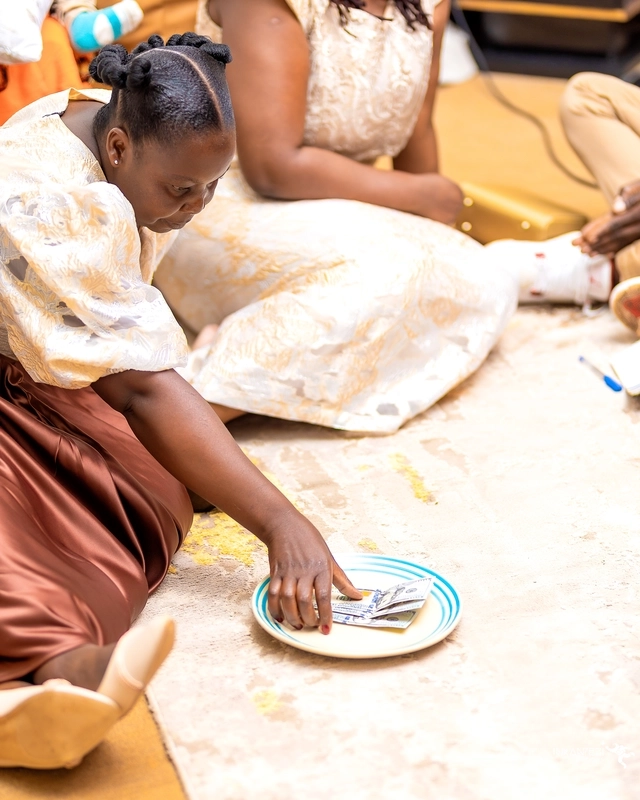
There is a certain gravity to a room where roora—lobola—is taking place.
The furniture is pushed back.
The floor becomes seating.
The air is thick with history.
People speak softly, not because they are afraid, but because the moment demands restraint.
This is not theatre. It is not content. It is not a trailer waiting to be cut to music.
It is a cultural transaction layered with meaning.
And how it is photographed—or filmed—matters more than we admit.
Roora Is Not a White Wedding in Traditional Clothing
One of the quiet tragedies of modern documentation is that roora is often miscast. Shot as if it were
a white wedding with brighter fabrics and louder drums. Slow-motion entrances. Cinematic walk-ins.
Emotional crescendos borrowed from a genre that was never meant to hold this story.
White weddings have their place.
Traditional ceremonies have theirs.
They operate on different logic.
Roora is not spectacle-first. It is value-first. Protocol-first. Respect-first. Its drama is intellectual
and relational, not performative. To understand this is to immediately reframe how one approaches it creatively.
Without that understanding, even the most beautiful images feel… off. Dislocated. Shallow.
What Roora Was Meant to Be
Roora—lobola, depending on language, not meaning—was never a money-making venture. It was never about
buying a person. That idea is a modern distortion, amplified by distance from context.
At its core, it served several purposes at once.
It was proof—not of wealth, but of responsibility.
A way of showing the bride's family that their daughter would be materially cared for.
A gesture of gratitude for the years, labour, and love invested in raising her.
In older societies, it was also economic circulation. Livestock moved between families—cattle, goats,
means of livelihood—especially in communities with both sons and daughters. Resources flowed. Bonds were
strengthened. No family hoarded forever; they participated in a living system.
And when a suitor did not have livestock? There was dignity in labour. He could work the land for a
season—or seasons—fulfilling the same obligations through effort, endurance, and character.
There were no hashtags.
No squads.
No audience.
Just meaning.
Respect Was the Currency
More than anything, roora demanded respect.
Posture mattered.
Tone mattered.
Silence mattered.
Hands clasped and clapped. Knees bent. Heads bowed. Not as performance, but as alignment with values
older than everyone in the room. The ritual trained humility into the body.
This is where many modern creatives falter—not out of malice, but ignorance.
When the Camera Becomes a Disruption
I have witnessed it too many times.
Negotiations still tense. The room full. Elders seated on the floor. And then—movement. A photographer
stepping over legs. A videographer whisper-laughing with a colleague. Someone standing too tall in a
space that requires lowering oneself.
Sometimes it's noise.
Sometimes it's dress.
Sometimes it's simply presence where absence would have been wisdom.
These moments don't just break concentration. They fracture trust.
Traditional ceremonies happen in intimate spaces—often a lounge, often packed, often emotionally charged.
To enter such a space requires more than gear and confidence. It requires cultural sensitivity. An
understanding that your role is not to lead, but to witness—carefully.
Reframing the Creative Approach
When roora is understood properly, the creative decisions change.
The camera becomes slower.
Angles become lower.
Movement becomes economical.
You stop chasing moments and start waiting for them. You realise that the most powerful visuals are
often still: elders listening, hands resting on knees, eyes lowered in thought. The story unfolds in
layers, not beats.
Videography, especially, becomes archival rather than performative. Voices matter. Proverbs matter.
The cadence of language matters. These are not background elements—they are the story.
This is how tradition survives translation into modern memory.
Education Is Preservation
Much of the current generation has inherited the form of roora without its philosophy. We know what
happens, but not always why. And when meaning erodes, documentation becomes careless.
Education, then, is not nostalgia.
It is preservation.
When photographers and videographers understand the intent behind the ritual, they make better decisions
instinctively. They dress differently. They move differently. They listen more than they speak.
And the work reflects that maturity.
A Quiet Responsibility
Photographing and filming African traditional ceremonies is not about adding another service to a list.
It is about being entrusted with something fragile.
You are allowed into rooms where history is negotiated in real time. Where families align futures.
Where respect is not symbolic—it is practiced.
Good documentation captures beauty.
Thoughtful documentation protects dignity.
And the best kind does both without ever announcing itself.
A Thought Worth Sitting With
Long after trends fade and formats change, these images and films will remain as evidence. Of how
things were done. Of who we were. Of what we valued enough to slow down for.
So perhaps the question is not, "Who can shoot our roora?"
But, "Who understands what is actually taking place?"
That understanding is rare.
Quiet.
And deeply felt—when it's present.